
It’s time to enter the Industrial Internet era
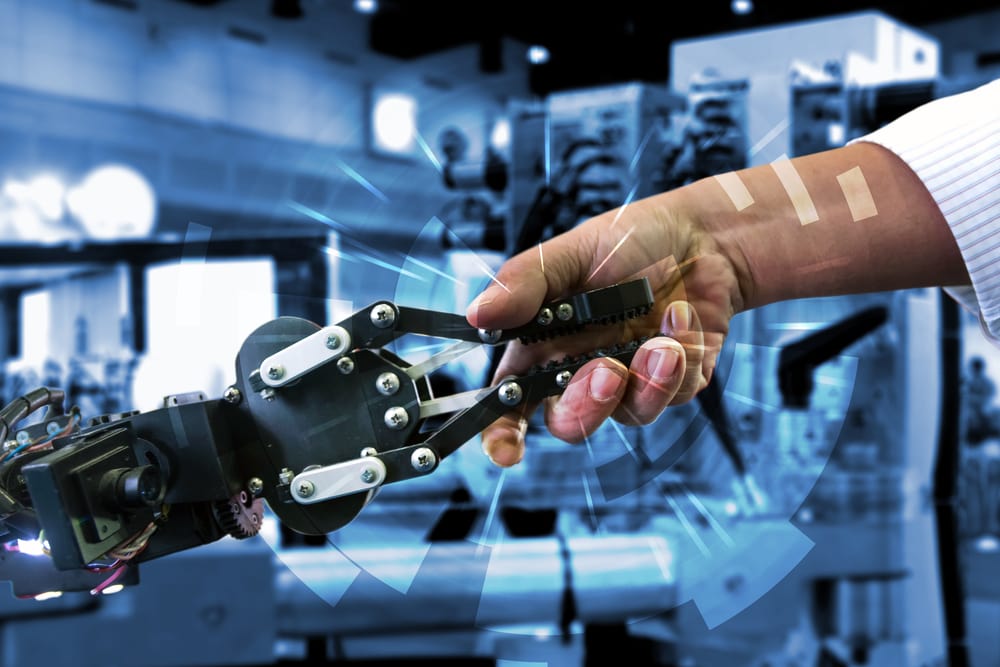
The Internet is a young technology, yet it has already generated prolific new economic activity: since its mass adoption in the late 90s, a BCG study estimatesthat direct spending on Internet services accounted for 4.1% of GDP in G20 countries in 2010. Another striking fact is that this dynamic has not been affected by the global economic crisis: between 2004 and 2009, in developed economies, McKinsey estimates that Internet technologies were responsible for a quarter of GDP growth.
The Internet is the most powerful infrastructure ever created: by enabling the exchange of ideas and access to information, it endows each individual with an unprecedented capacity for action and creation, and enables them to work with other individuals, without having to ask for a pass or authorization of any kind. Berners-Lee didn’t ask permission to invent the Web, and not all Internet users needed to ask him to use it. These values have made the Internet an inexhaustible source of innovation and renewal. Applied to our economic and social systems, the creative force of these values could generate new solutions without requiring further fiscal stimulus from governments. It’s time to enter the era of the industrial Internet.
Creating opportunities for growth
In the private sector, economic growth and productivity gains depend on the adoption of Internet technologies. Numerous studies have shown that the recent increase in the productivity gap between the USA and Europe can be largely explained by the rapid adoption and better use of Internet technologies by businesses on the other side of the Atlantic. For example, one estimate suggests that the adoption of cloud computing by businesses could lead to an increase in European GDP of between 0.1 and 0.4%. As for large companies, the study, carried out by Capgemini Consulting and MIT, establishes the real superiority of companies that have completed their digital transformation. These companies, called “Digirati” in the study, outperform their competitors in financial terms. Compared to the industry average, they generate 9% more revenue per employee, are 26% more profitable, and are better valued (+12%) by financial markets. In the case of SMEs, intensive use of digital tools can double sales and exports. A recent study by General Electric shows that integrating digital technology into the industrial world could generate an increase of 1 to 1.5 points in productivity. Digital technology is thus a tremendous opportunity both to improve the productivity of French companies and to open up new markets for them.
Investing in human capital
Access to education is uneven throughout the world. In particular, prestigious higher education establishments are reserved for an elite. The current movement to make educational content openly available on the web means that everyone can access it, whatever their income level or where they live. Thus, 2012 saw the emergence of a trend towards the democratization of higher education, thanks to and on the Internet. Both Udacity and Coursera, two startups offeringMassive Open Online Courses, were founded by former Stanford professors in early 2012. They were quickly followed by Harvard and MIT, joined by Berkeley, who have joined forces to create a platform of free Internet courses accessible to all. Programs like OpenCourseWare, available at hundreds of colleges and universities, enable students and teachers to tap into the resources of some of the world’s best institutions. For example, MIT’s OpenCourseWare site has been consulted by 95 million visitors from all over the world, 43% of whom are self-taught. The massive commitment to making educational content available is thus a factor in reducing social inequalities.
These alternative solutions are available for all levels of education, as evidenced by the more than 3,000 Khan Academy courses. These resources can help make education more equitable by giving young students, but also adults, access to a wider range of high-quality content. What’s more, mixed models – i.e., combining online content with the traditional classroom setting – encourage teachers to pay greater attention to their pupils’ difficulties and progress. Digital technology can thus be a real lever for engaging students in the pedagogical process, and thus for improving learning outcomes.
Reforming the public sector
Economic difficulties and budget restrictions now require us to provide a high level of public service while optimizing expenditure as far as possible, both at national and local level. Let’s start with public procurement procedures. In South Korea, for example, the digitization of public procurement procedures has enabled savings of $6 billion, or over 12%, on an annual public procurement volume of $50 billion. At city level, the use of cloud computing by Novara, a city of 100,000 inhabitants in northern Italy, enables it to save 30,000 euros every year. For a city like Paris, this could represent annual savings of almost 700,000 euros! The example of the digitization of pay slips is also enlightening: applied to the 5.2 million pay slips in the civil service, it would save the French state 70 million euros a year!
When it comes to public services, open and reusable public data is the raw material for entrepreneurs and citizens alike to build new civic services. By demanding open and accessible information from the public sector, experts estimate that, in Europe alone, the benefits could measure between 140 and 180 billion euros a year. The efficiency gains from opening up data to the public far outweigh the short-term costs of investing in platforms and technologies to provide data access. For example, in Denmark, in 2002, the decision was taken to make the national database of physical addresses accessible to the public, at minimal cost, generating an additional value of 62 million euros for the Danish economy. What’s more, making public data accessible also offers better traceability of government policies and the possibility of evaluating them. In this sense, open data policies are a guarantee of greater transparency in public action, boosting citizen confidence and encouraging civic engagement.
Digital technology is an opportunity that must be seized as a matter of urgency. If it calls existing models into question, it’s to make way for innovation and more efficient management. Let’s do everything we can to ensure that France enters the Industrial Internet era with vigor and ambition.