
Laurent Depond, Orange: “I’m committed to equality”.
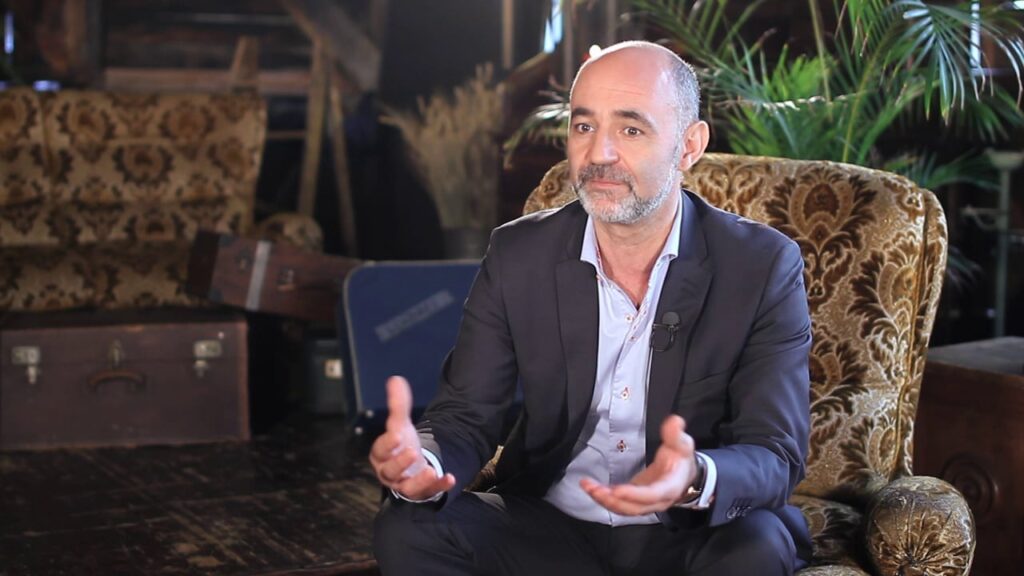
Femmes du Numérique: What have you implemented, extended or enriched in terms of gender equality since the end of 2012? Remind us where you were at that date?
Laurent Depond:Since 2012, we’ve been putting things into perspective in a different way. Today, the debate has been broadened to encompass gender equality as a whole, including all measures deployed outside the workplace.
McKinseystudiesrevealedthat the ecosystem had to evolve to create wealth. As part of ourEssentiels2020 strategic plan, we see ourselves as a responsible and humane digitaloperator. We have a duty to develop our ecosystem. We believe that equality between men and women is an extremely powerful lever in all our geographies, and we want to commit to it. Professional equality is seen as one of the levers of digital transformation.
Our internal actions are also carried out externally, for example theDigitalHousetoempower women in Africa and elsewhere. We have put in place a wide range of systems based on our coredigital business. For example, mobilebankingin Africais ahighly value-creating activity that empowers women, who can use their cell phones to becomebankable.
This global perspective came to fruition with the signing of theWEP(Women Empowerment Principles) byStéphaneRichardlastyear in 2015. Today, we take a global approach to gender equality. With regard to equality in the strictestsense of the term, we have come to realize that sustainable and relevant achievements can only be achieved with the commitment of men.
CirclesHappy Men Share Morean innovative program initiated by theMercredi-c-Papa association, aims to make men aware that the issue of equality opens up new prospects for their professional and personal development. The priorities were that 85% of the levers and 85% of the brakes were in the hands of men, so it was necessary to unlock men to move the process forward, tomove away from a compassionate approach(assertiveness training, mentoring, women’s networks) to move the lines, thinking more in terms of breaking with men.
Our company is proactive when it comes to appointment processes and the elimination of pay inequalities, and pays particular attention to thecollateraldamagecaused by the exclusion of men.We need to accompany men into other spheres – lateral rather than hierarchical development – and opt for personal investment outside the company in the private sphere, in associations for example.
Find a new way for the Chairman and members of the Executive Committee to communicate the fact that we are a company that firmly believes that professional equality at all levels and in all professions is fundamental to our sustainable performance. Our sustainable performance also means evoking the fact that we are at the cutting edge of innovation and creativity, without depriving ourselves of any talent, and by sweeping away stereotypes.
If we think that innovation and creativity only come from white, male engineers of a certain age and background, we’re missing the point. The female component needs to be integrated and valued to bring out this creativity.
We have conducted studies to gain a better understanding of the levers and obstacles to equal pay throughout a career. The subject has become highly professionalized as it has matured, with the Strategic Committee for Equal Opportunity taking the overall lead. This committee defines the main thrusts of the Group’s gender equality policy, which is supported by the Group Executive Committee.
<p><strong>A must-read if </strong>….On needs concrete arguments to convince (himself) that the digital apocalypse won't happen.</p>rn
FDN:Could you give us a few concrete examples of your latest actions in favor of professional equality?
LD: Our main actions focus on transforming mentalities, because we’re still bogged down in societal stereotypes that have a considerable impact inside the company, for example on the way women speak out. The aim today is to raise awareness of these biases and work on them, to eliminate from the decision-making process all the stories of the past that exclude women from promotion and visibility. The hunt is on for the “invisible woman”!
Once you’ve broken through the clouds, you become visible andpart of the upper echelon, you become a “boss” and career development is easier, as new positions are envisaged. On the other hand, being identifiedin the Pipelineis often a matter of luck. Traditional criteria for identifying talent are based on masculine codes and date back to a bygone era.
With digital transformation, we need to review these criteria, valuing expertise or functional management, for example, and not just the hierarchical responsibility of large teams. We need to consider the importance of support functions for performance, and not limit talent to the technical world. With virtual teams, the prism has changed: the ability to get people to work together without hierarchical positioning is to be favored.
Ability to pay attention to the uniqueness of individuals, to achieve objectives together. Rethinking things, giving new criteria to objectivize the means of detecting new talent, particularly female talent. The “hunt for the invisible woman” is being tested in some of our European subsidiaries, where talent managers and HR are seeking to identify female talent using new approaches.
We need to revisit the traditional notion of the leader in the organization, because today’s leader is an engineer with strong managerial scope. We need to think in terms of valuing and contributing to today’s ecosystem. After awakening, awareness comes from managerial support systems, such as Orange Campus, which integrates this broader vision into all its managerial training courses, with the aim of combating the impact of stereotypes. To get into the mindset, this vision is taken to the highest level of the company by the executive committee, in particular to raise awareness of #JamaisSansElles,#HeforShe.
It’s no longer politically correct not to be engaged. Managers know that this is unexpected. The Group’s managerial model is used to promote and recruit new managers, and includes the ability to manage diversity among its components. This criterion has evolved over time. Communication about stereotypes is recurrent, and needs to be updated to encourage a responsible attitude to communication, which excludes all stereotypes as a matter of principle.
With the strong trend towards digital transformation and the challenges of corporate services, the idea is to change the codes to avoid depriving ourselves of any talent, to value people, to think in terms of individuality and managerial quality.
We’re taking professional equality on board as part of a global revolution, without making it a separate system. The Essentiels2020 strategic plan includes a vision of professional equality among its subjects.
FDN: What qualitative and quantitative results have your actions brought?
LD :On the qualitative dimension, it’s no longer politically correct not to be committed to professional equality when you’re a man, a manager, you can no longer say you’re against it. Ninety percent of the men and women in the Group feel that Orange is very committed to this issue – a great result!
In quantitative terms, the gender pay gap at Orange is less than 1%. Equal pay is a worldwide policy. Orange is certified by the Gender Equality European and International Standard, which testifies to the Group’s commitment to equality between men and women, particularly in terms of equal pay, work-life balance, gender diversity and women’s access to positions of responsibility. Three new European subsidiaries were certified this year: Poland, Luxembourg and Romania. Egypt is our first African business to be certified, and the process will be extended to the entire continent.
When it comes to appointments to the COMEX, Stéphane Richard is sensitive to the need to maintain a balance between men and women.Orange ranks fourth among French SBF120 companies in terms of the number of women in its management bodies. Orange has set itself an ambitious target for the feminization of its CODIRS, with a rate of 25% in 2012, which has now risen to 32%, very close to the 35% target corresponding to the company’s feminization rate.
The feminization of professions is also encouraged through the Capital filles program and communication campaigns on future professions featuring women, in order to attract young women. The creation of girls’ classes with work-study training enables young women to acquire the technical skills needed to work as service technicians, and to obtain a permanent contract: in the Ile-de-France region, the rate of feminization of these professions has doubled.
The aim of the shadowing scheme is to persuade high-school and middle-school girls to come and discover the day-to-day life of Orange’s scientific and technical professions, in order to combat stereotypes: they accompany female mentors for a day… A communication program has been set up and shared with the French Ministry of Education to help associations promote the benefits of scientific and technical professions. The aim is to demonstrate that an engineer is not just a white coat in a laboratory in front of a screen, and to break down stereotypes among girls, parents and careers advisors. Internationally, high school girls have taken part in this program in many of the Group’s geographies, including Singapore, Brazil, India, Italy and Germany.
Few girls choose the career paths that lead to our core businesses, due to a lack of knowledge. Orange is working hard on Role Models. Young talents are highlighted in the media to attract female applicants.
Mentoring has become global, extending to all countries and all hierarchical levels. One initiative in particular targets women with executive potential.
The extended roll-out of Happy Men circles, soon to include Spain and Belgium. A quick cultural overview highlights Eastern Europe, which is very fair on the issue of women’s access to positions of responsibility, but where prejudices about the role of women persist. In Africa, particularly Senegal, women work but hand over their money to their husbands. A cultural barrier difficult to overcome.
Systemic wage discrimination in a situation where the head of the family can only be a man, and can only benefit from family advantages in terms of taxation in a deduction-at-source system, which makes it difficult to achieve gender equality. Culturally, men don’t take care of children or household chores.
To break out of these cultural biases, we need to show other role models, communicate on the Orange Foundation’s digital houses / FabLabs solidaires to convey non-stereotypical messages and get the lines moving, and make the existing model evolve.
New generations behave differently, but retain traditional stereotypes from the moment they have their first child. Challenging these stereotypes is not so easy. Communication campaigns in high schools and middle schools are an ideal lever. The Capitale Filles scheme launched in Romania and Poland explains scientific and technical professions and encourages young girls to enter them. Supported by the prospect of sustainable employment, the aim is to encourage young girls to choose these promising careers.
In terms of professional equality, France is well placed, backed by legislation, but stereotypes are still prevalent. Spain is very active, as is Romania, each with its own biases and delays. Today, no solution is perfect. Best practices are being exchanged, and Spain is inspiring in terms of work organization and work-life balance. Digital technology makes it easier to organize work. Happy Men will soon be expanding into Spain and Belgium, underlining Orange’s commitment to balancing private and professional life.
Difficult to envisage in Africa because of the cultural place of women in the professional environment (women work for men).
FDN: What have you learned from these experiences? Successes, difficulties, areas for improvement…
LD :A more detailed understanding of the subject, and the external and internal studies carried out, have shown that certain comfortable actions lead nowhere, such as women’s networks, which reassure women but have little impact on changing things. Women are well represented in women’s networks, which contributes to the quality of life at work, but is not a powerful lever for professional equality. For Orange, there’s no point in lobbying because the COMEX is convinced.
Orange stands out for its highly feminized COMEX, number two in the CAC 40. The women on the Comex have wide-ranging operational responsibilities, or functions where they are not expected, such as steering the Group’s technical functions… Fabienne Dulac, Executive Director of Orange France, is in charge of France’s 80,000-strong workforce and substantial sales. Like Mari-NoëlleJégo Laveissière, who heads up marketing, innovation and information systems, she goes beyond traditional stereotypes.
Through the studies, the aim was to identify what was really impactful and how to achieve the objectives by identifying specific levers.
FDN: Based on the experience you’ve gained with your professional equality project or plan, what advice (steps, organization, best practice, simple and effective idea…) would you give to a structure embarking on such a project to help it build it effectively and avoid the pitfalls?
LD :My advice would be:
- Include men and don’t make a system just for women
- Consider a gender-balanced, integrated approach from the outset in all the company’s HR processes. Revisit from a professional equality perspective.
- Sharing of leaders and emblematic appointment decisions with examples and role models
- Avoid “cautionary women”, preferring women with credibility. Appoint talented women capable of holding down jobs where they are not expected.
The pitfalls would be to reason in :
- women only
- compassion and short-termism
- legislation with quota and image constraints
Establish your diversity business case, integrate people who think differently, new profiles to make better decisions and ensure better buy-in and on-boarding. To be credible and exemplary, managers need to speak out on human commitment.
Interview conducted by : Myra BRAGANTI, CBO Never Eat Alone