
Cathy Lacomme-Verbiguié, Expert(e) interview
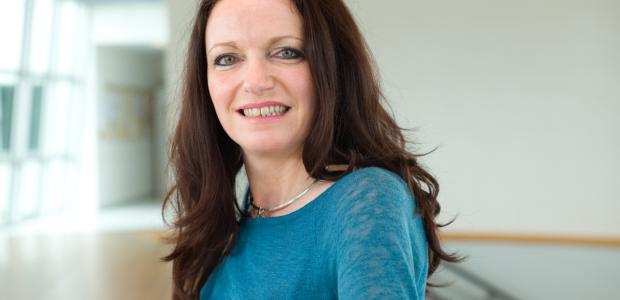
Femmes du Numérique:Women, an opportunity for digital. Digital, an opportunity for women. What’s your opinion?
Cathy Lacomme-Verbiguié:Women, an opportunity for the digital industry, certainly! These new professions are sorely lacking in female talent, as they are still too often perceived as highly technical or requiring rare, specialized skills. Women do have their place, but they need to put prejudices aside and project themselves into an emerging field where their creativity, pragmatism and adaptability will be appreciated.
The opposite is also true: it’s a real opportunity for women, because digital technology is penetrating our daily lives more and more, and business needs are exploding: everything has to be built, and new professions are emerging. Companies are embarking on their transformation from either a technological or organizational angle, or are starting from an internal or external, customer-oriented perspective. For women, all these facets are an opportunity to play their part in the process, bringing their own skills to bear.
For me, working in this field was a conscious and deliberate choice. I have a scientific background with dual skills in IT and business management. I started out in highly technical positions with operational responsibilities. Since then, I’ve worked my way up through the ranks, always in IT production, and today I’m leading a major transformation project for the CNES Information System Department, in preparation for the challenges of tomorrow.
FDN:According to McKinsey’s 2011 study “Women Matter: gender diversity, a lever for corporate performance”, companies with a higher proportion of women on their executive committees or in their management teams are also more successful. Do you think that business leaders are aware of the advantages that gender diversity can bring to their companies?
CLV:I don’t think so, otherwise we wouldn’t still be approaching the 27% figure for women in this field, which has shrunk to less than 20% in management teams. However, diversity is a real asset for the company, and gender diversity is the first step in taking advantage of the complementary approaches, visions and actions of men and women on the same subject.
It’s in the sharing of ideas, the constructive exchange with each person’s own perception and sensibility, that new, innovative, value-creating ideas emerge, indispensable to the company’s evolution towards greater performance.
FDN:Do you think women have a particular conception of management? What are their particular qualities within a company?
CLV :Women often have a strong human side, and have all the qualities needed for management. Their empathy enables them to grasp complex situations pragmatically. They also know how to maintain the distance and clear-sightedness needed to find solutions with their teams, by encouraging collaborative work. They often prefer to promote collective success rather than individual success, thereby ensuring recognition, support and cohesion within their teams.
They are highly organized and adaptable to professional situations, qualities that often stem from their personal lives, where they excel in “multitasking”, juggling their lives as mothers, wives and careers.
FDN:Have you noticed any particular progress or mobilization in favor of equality between men and women? Or, on the contrary, do you still feel reluctant to promote gender equality?
CLV:I can see that a number of initiatives are working to promote equality, but there’s still a long way to go. There is a growing awareness among the younger generations, who want it all: a rewarding, meaningful job, quality of life at work, a rich personal life and room for family and leisure. This difficult equation involves sharing tasks within the couple and choosing a company committed to reconciling professional and personal life.
Women also take matters into their own hands, for example, by developing their networks and seeking support from their peers inside and outside the company. Mentoring is also an interesting practice, enabling them to develop their self-confidence.
FDN:Have you encountered any gender-related difficulties in your professional development?
CLV :Probably, but I didn’t want to give it any more importance than any other type of difficulty, focusing more on solving it than moping around. Like many women, I had to prove myself to be recognized for my skills.
Even today, in my professional encounters, women only represent 10%, so I don’t really pay attention to them anymore. I try to move forward simply by trusting myself, because I’m not here by chance.
In fact, I really grew professionally and established my position the day I decided to be myself, displaying my convictions and ideas because I could easily defend them rather than trying to fit into a conventional mold that didn’t suit me.
FDN:How do you defend gender equality in your professional and personal life?
CLV :Every day, unconsciously – no doubt about it – and sometimes more consciously, by taking part in pro-equality events.
In my company, I took part in a focus group to draft a framework agreement on work-life balance, during which I was able to put forward new ideas. I work with the HR department on this subject through round tables and conferences. On a personal note, I took a MOOC on “Being in charge tomorrow: training in gender equality” to learn more.
In fact, I took part in a seminar entitled “Le Spatial déploie ses Elles” (Space deploys its Elles) to share my experience as a project leader and manager, and I led a workshop on “How to instill a dynamic of parity at CNES”.
In the current transformation program I’m running, I’ve been able to entrust half of the projects to women, and I involve them in workshops to co-construct new business lines, because they develop the ability to listen attentively, are open to the opinions of others and tend to be more constructive in their criticism.
Lastly, as far as my own daughters are concerned, I fight reductive stereotypes on a daily basis, encouraging them in their studies by emphasizing their qualities, aptitudes and skills to develop their self-confidence.
FDN:And personally, how have you managed to reconcile work and family life?
CLV :I’ve set up a real family organization so that I don’t get overwhelmed. I set aside time to refocus on the essentials and recharge my batteries. I’ve come to accept that not everything can be perfect, but I always know where my priorities lie.
I no longer feel guilty about getting help to free up quality time for my loved ones. Equitable sharing with a spouse is also key. With my children, I talk about my career plans – in broad terms, of course – sharing both the difficulties and the successes, to show them what “real life” is like at work.
FDN:What advice would you give to a young woman hesitating to work or start a business in the digital sector?
CLV:You have to jump in without hesitation, because the digital sector is booming! It’s exciting and full of opportunities that you have to seize.
Indulge your curiosity, step out of your comfort zone and discover new horizons… The digital transformation is underway, and it’s hitting every field with full force. You don’t have to be ageek to take part. Your organizational skills, your ability to bring people together and your adaptability are your strengths, and essential qualities to support companies through the technological and organizational changes of tomorrow.
A final word of advice: give yourself permission to be yourself. You’ll be more effective if you put your energy where it’s needed!
Biography
After training as a scientific engineer with dual skills (business IT and telecoms), Cathy Lacomme-Verbiguié spent 10 years working for an end-user in the chemical industry,firstas a systems engineer, then as a production manager. She joined CNES (Centre National d’Etudes Spatiales) in 2002 to put the SAP ERP system into production, before taking over responsibility for CNES application systems operations 4 years later. Since 2010, she has been deputy CTO(Chief Technology Officer) at CNES, in charge of optimizing resources and industrializing IT production.
Passionate about this profession, she has been leading an IT Department transformation project for the past 18 months, to anticipate the changes to be implemented in terms of management, organization and resource management to align with the new business needs of the space industry. She provides human support to the teams involved in implementing these changes. In November 2015, she received the “CTO of the Year” trophy awarded by the profession through CRIP (Club des Responsables d’Infrastructure et de Production).
Convinced that women have a role to play in the digital sector, she is committed to encouraging them to take on more responsibilities within the company, as she sees gender diversity as an essential factor in improving performance.